Foundational Principles
Discover the key mechanisms that drive social language learning, from the Zone of Proximal Development to the Negotiation of Meaning.
Zone of Proximal Development
Introduced by Lev Vygotsky, the Zone of Proximal Development (ZPD) is a fundamental concept in sociocultural theory. It represents the critical gap between what a learner can accomplish independently (their actual developmental level) and what they can achieve with guidance and encouragement from a skilled partner (their potential developmental level).
In the context of Second Language Acquisition (SLA), the ZPD suggests that language learning is not a solitary endeavor but a collaborative process. Interaction with a "More Knowledgeable Other" (MKO)—whether a teacher, a peer, or even a digital tool—allows learners to perform beyond their current capabilities, internalizing new linguistic structures and functions through social mediation.
Key Components:
- Actual Development Level: The functions that have already matured; tasks the learner can complete independently without assistance.
- Potential Development Level: The functions that are currently in the process of maturation; tasks the learner can complete with assistance.
- The Zone: The dynamic region where instruction succeeds. Learning leads development in this zone through social interaction.
"What a child can do with assistance today she will be able to do by herself tomorrow." — Lev Vygotsky
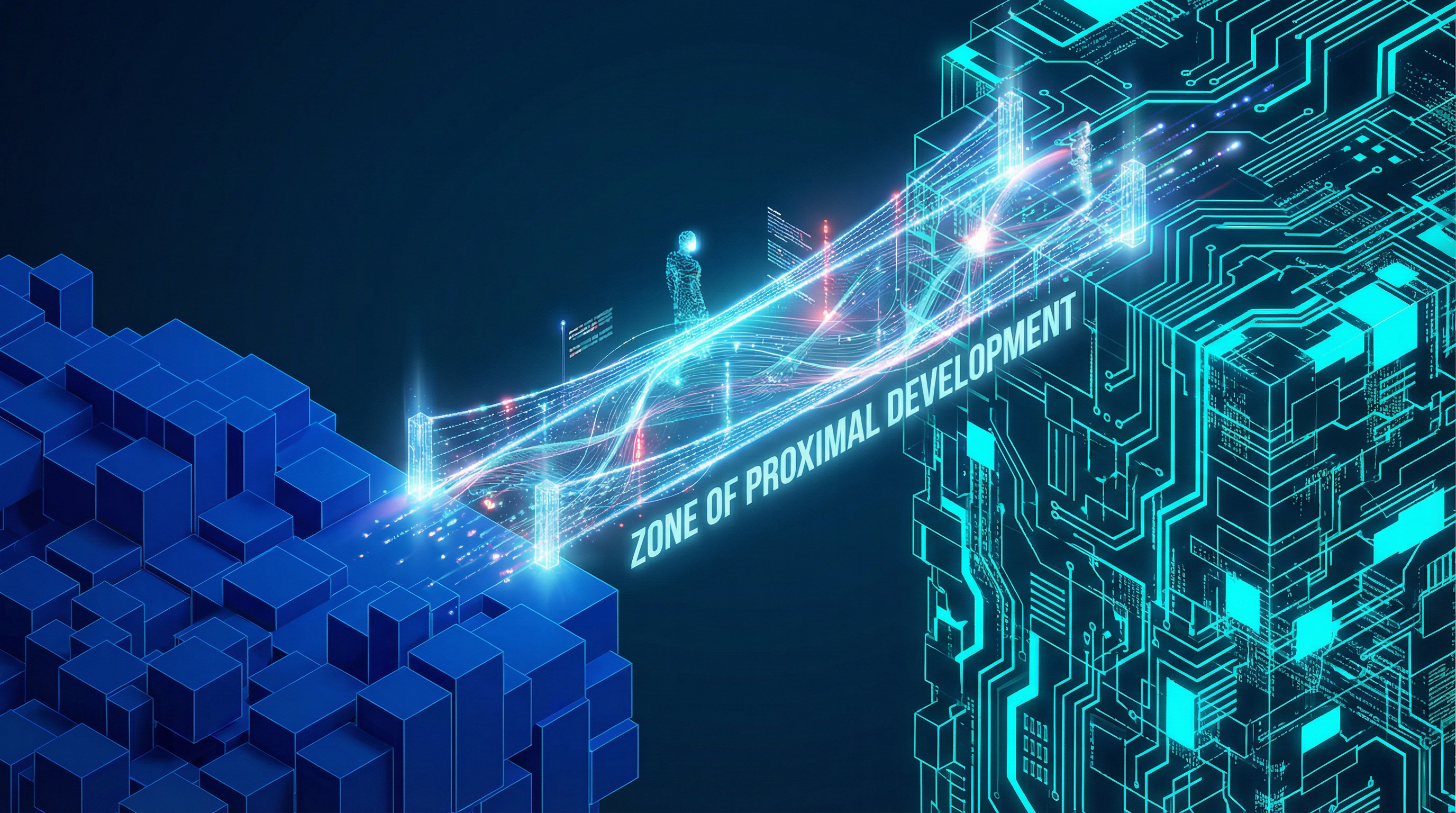
Visualizing the gap between ability and potential